
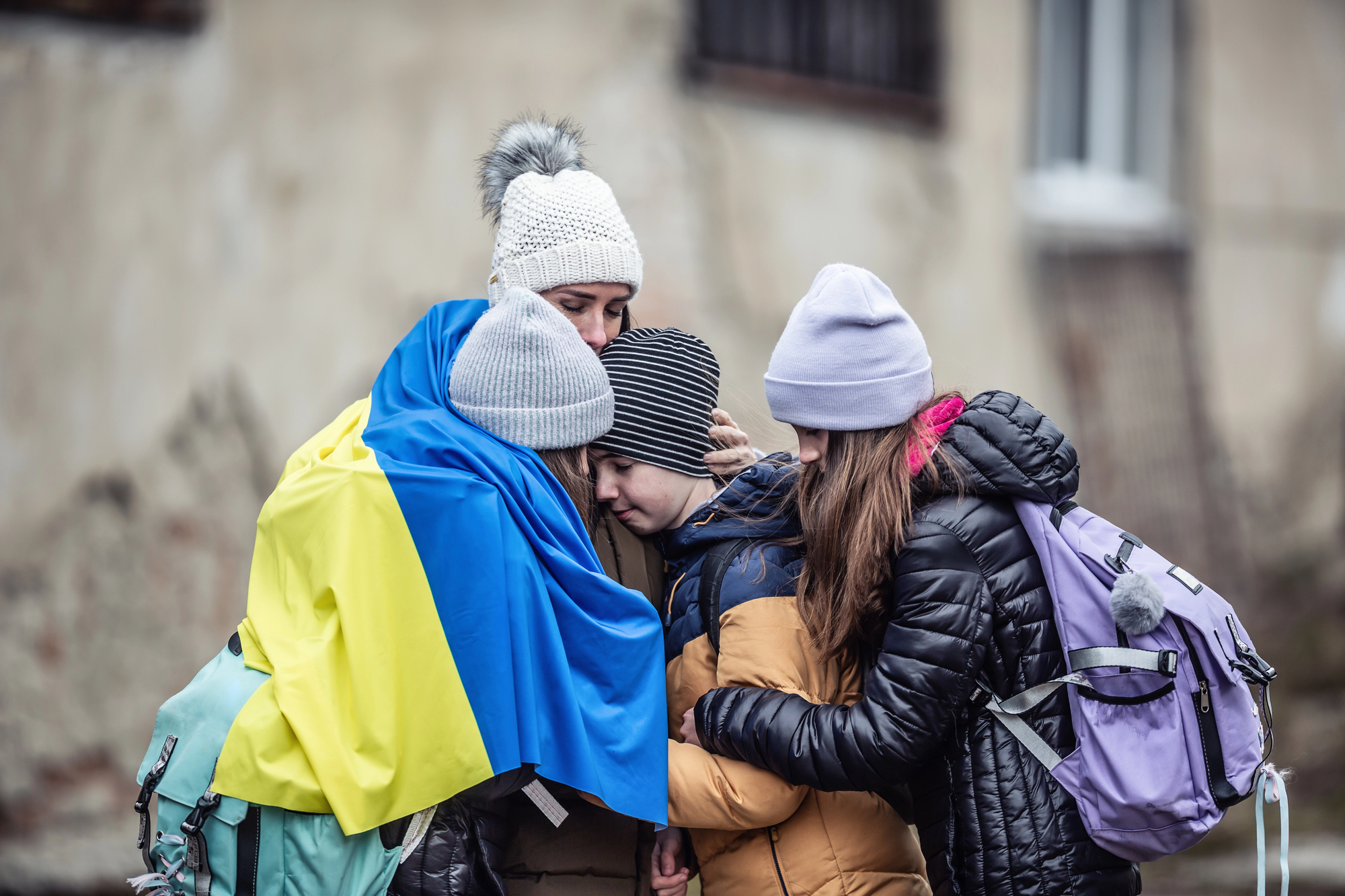
Ukraine has experienced one of the most dramatic migration shifts in Europe in recent years. Migration has always shaped the country to some extent, but today it is central to understanding Ukraine's demographic future, labor market, family life, and long-term recovery. With a 2024 population of 37,860,221 spread across 603,500 km², Ukraine remains one of Europe's largest countries by area, yet its population structure shows clear signs of strain. The country has a median age of 41.89, a very low total fertility rate (TFR) of 0.977, and a sharp imbalance between births and deaths, with a crude birth rate (CBR) of 5.625 and a crude death rate (CDR) of 13.13.
These figures matter because migration does not happen in isolation. People move in response to war, insecurity, job shortages, family disruption, and demographic pressure. At the same time, migration itself changes the age structure, fertility outlook, and economic potential of the country. Ukraine's recorded net migration figure of 1,146,012 is a striking sign of how unusual and disruptive current population movements have become. Combined with a modest headline population growth rate of 0.337%, it suggests that migration is now a major demographic driver, outweighing the country's weak natural increase.
This article explains the main migration patterns affecting Ukraine, the causes behind them, their social and economic consequences, and what future projections may imply if current trends continue. While the numbers provide a snapshot, the deeper story is about how conflict, low fertility, mortality, and regional inequality combine to reshape an entire nation.
Ukraine (2024)
| Population | 37,860,221 |
| Growth Rate | 0.34% |
| Density | 65.1/km² |
| Fertility Rate (TFR) | 0.98 |
| Life Expectancy | 73.4 |
| Median Age | 41.9 |
| Birth Rate | 5.6‰ |
| Death Rate | 13.1‰ |
| Infant Mortality | 7.8‰ |
| Net Migration | 1,146,012 |
The Big Picture: Migration Now Drives Ukraine's Demographic Story
In many countries, population change is mostly determined by births and deaths. In Ukraine, however, migration has become unusually important because the natural demographic balance is so weak. The country's CBR of 5.625 is extremely low, while the CDR of 13.13 is much higher. In simple terms, deaths considerably outnumber births. This creates a strong downward pressure on population size even before migration is taken into account.
The fertility data underline the problem. A TFR of 0.977 means that, on average, women are having fewer than one child over their lifetimes under current rates. That is far below the replacement level of about 2.1. Such a low level does not just reduce births today; it also narrows the number of future parents, creating long-term demographic inertia.
Migration therefore becomes the factor that can either soften or intensify population decline. The reported net migration of 1,146,012 is enormous in relation to the country's total population of 37.86 million. It amounts to roughly 3.0% of the total population, which is exceptionally large for a single year in demographic terms. Numbers on migration in Ukraine should always be interpreted carefully because conflict conditions can complicate the distinction between refugees, temporary displacement, return migration, and long-term resettlement. Still, the scale itself leaves no doubt: population movements are massive.
Another important feature is the age profile of the population. Ukraine's median age of 41.89 points to an aging society. When migration disproportionately involves younger adults and families with children, the remaining population tends to age even faster. This affects schools, labor supply, tax revenues, and the capacity for economic recovery.
Why migration matters more in Ukraine than in many other countries
- Natural decrease is severe: with births far below deaths, migration has an outsized impact on total population change.
- The age structure is vulnerable: loss of younger adults can accelerate aging.
- Regional disruption is intense: conflict and insecurity affect where people can safely live and work.
- Recovery depends on people returning or staying: reconstruction requires labor, families, teachers, and healthcare workers.
The Main Migration Patterns: Displacement, Emigration, and Uneven Return
Ukraine's migration pattern is not a single movement in one direction. It is better understood as a combination of several overlapping flows. Some people have left the country entirely. Others have moved internally from unsafe or economically damaged regions to safer cities or western areas. Some have returned after a period abroad, while others continue to move back and forth depending on security, employment, and family needs.
1. Cross-border out-migration
The most visible pattern is movement across borders. In times of crisis, people often leave quickly for safety, especially women, children, and older relatives. In Ukraine's case, this outward movement has had a strong humanitarian dimension, but over time it also becomes an economic and demographic issue. Once families settle abroad, children enter schools, adults find work, and social ties deepen, return becomes less certain.
This is particularly important in a country with such low fertility. If many women in their childbearing years leave and remain abroad, births that might once have occurred inside Ukraine may instead occur elsewhere, or be postponed entirely. Given the country's TFR of just 0.977, even a modest shift in the number of young families can have large consequences for future births.
2. Internal displacement and regional concentration
Internal migration is another major pattern. Many Ukrainians have relocated within the country rather than leaving it. Such moves typically concentrate population in safer urban centers or western regions. This can temporarily support local economies in destination areas, but it also places pressure on housing, services, schools, and healthcare systems.
At the same time, origin regions may suffer population loss, shrinking labor markets, and interrupted public services. If displacement becomes prolonged, temporary moves can become semi-permanent. That changes local demographics, especially if younger and more mobile residents are the first to leave.
3. Selective return migration
Return migration does occur, but it is usually uneven. Some people return once immediate danger decreases, when schools reopen, or when jobs become available again. Others return seasonally or in stages, with one family member moving first to test conditions. However, return rates are often lower among people who have found stable housing, employment, or education opportunities abroad.
The long-term question is not simply how many people return, but who returns. If older adults return in greater numbers than young professionals or families with children, the demographic benefit may be limited. For reconstruction, the return of working-age adults is especially important.
The Causes Behind Ukraine's Migration Crisis
Migration from and within Ukraine has multiple causes, but they reinforce one another. Security concerns may trigger the initial move, yet economic weakness, family separation, and demographic realities often determine whether migration becomes long-term.
Conflict and insecurity
The most immediate cause of large-scale movement is insecurity. When people's physical safety is at risk, migration becomes a survival strategy rather than a lifestyle choice. This kind of movement is often sudden and traumatic, and it rarely follows normal labor migration patterns. Families may be split, assets abandoned, and future plans disrupted.
In demographic terms, insecurity has indirect effects too. It lowers fertility, delays marriage, disrupts healthcare access, and increases uncertainty about where children can safely grow up. Ukraine's current demographic indicators reflect this stress. The birth rate of 5.625 is extremely low, and the death rate of 13.13 remains high, producing a strong natural decrease.
Economic pressure and labor market disruption
Even where insecurity is not the immediate cause, economics matters enormously. War damage, reduced business activity, infrastructure loss, and uncertain wages all encourage migration. People often move because they need stable income, predictable schooling for children, and access to functioning services.
For working-age adults, especially skilled workers, migration can be both a coping mechanism and an investment in the future. If earnings abroad are significantly higher and more secure, temporary migration can gradually become permanent settlement. This creates a classic "brain drain" risk, where educated and productive citizens are disproportionately lost.
Demographic fragility before migration even begins
Ukraine's migration challenge is intensified by the fact that the country already had a fragile demographic foundation. A median age near 42 indicates an aging population. Life expectancy is 73.422 years, but there is a notable gender gap: 66.9 years for men versus 80.198 years for women. This difference matters because migration decisions, labor participation, household structure, and caregiving burdens are all affected by gendered mortality patterns.
The country also has an infant mortality rate (IMR) of 7.8, higher than in many wealthier European states, suggesting continued health system pressures. Together, low fertility, higher mortality, and aging make Ukraine less able to absorb population losses. In a younger, faster-growing country, migration outflows might be offset by larger cohorts reaching working age. In Ukraine, that buffer is weak.
The Demographic and Economic Consequences
Migration is not just about how many people leave or arrive. It changes the composition of the population, and composition is often more important than headline totals. A country can lose a relatively modest share of its population numerically but still face major challenges if the losses are concentrated among young adults, skilled workers, and families with children.
Population aging and fewer births
Ukraine's demographic structure was already under pressure, and migration can accelerate that pressure. If younger women and families spend their childbearing years abroad, the already very low TFR of 0.977 may remain depressed for longer. This feeds into a cycle of fewer births, smaller school-age cohorts, and ultimately fewer workers in the future.
Because the CDR of 13.13 is more than double the CBR of 5.625, Ukraine is already experiencing strong natural decrease. Migration loss among younger age groups makes that imbalance even harder to reverse.
Labor shortages and reconstruction challenges
Rebuilding homes, roads, schools, hospitals, and industry requires a large and capable workforce. If too many skilled workers remain abroad, reconstruction becomes slower and more expensive. Labor shortages may appear in sectors such as healthcare, engineering, transport, and education.
This challenge is made more serious by the age profile of the population. A median age of 41.89 means Ukraine cannot rely on a large youth bulge to replenish labor supply quickly. Even if the overall population appears temporarily stabilized by net migration accounting, the structure of that population will determine whether the economy can recover strongly.
Regional inequality inside the country
Migration also widens differences between regions. Areas that receive displaced people may gain economic activity, consumer demand, and labor, but they can also face overcrowded housing and pressure on municipal budgets. Areas that lose people can face school closures, weakened local tax bases, and long-term depopulation.
This uneven geography matters in a country as large as Ukraine, covering 603,500 km². Distance, infrastructure quality, and regional economic specialization all shape where people can realistically relocate and whether they can later return.
What the Future May Look Like: Trends, Comparisons, and Projections
Looking ahead, Ukraine's migration future will depend on three broad questions: security, economic opportunity, and family reintegration. If safety improves and reconstruction creates jobs, return migration could strengthen. If uncertainty remains high, many temporary absences may become permanent.
Population projections depend heavily on migration
Ukraine's headline population growth rate of 0.337% may look modestly positive, but it should not be read as a sign of demographic health on its own. The country still faces severe natural decrease because births are far below deaths. That means future population stability depends heavily on migration behavior and how counts are measured across a changing population context.
In practical terms, projections for Ukraine are more uncertain than for many stable countries. A large wave of return migration could improve school enrollments, household formation, and labor supply relatively quickly. But if younger cohorts remain abroad, the country may continue aging rapidly, with long-term effects on pensions, healthcare demand, and regional vitality.
How Ukraine compares with wider Europe
Ukraine is part of Eastern Europe, a region where low fertility, population aging, and emigration have already been common themes. But Ukraine's situation is more intense because these long-running demographic pressures are now layered with extreme disruption. In many European countries, migration is mainly tied to labor market choices; in Ukraine, migration is deeply intertwined with safety, displacement, and national recovery.
The comparison that matters most is not simply with richer countries, but with the demographic replacement threshold. A TFR below 1.0 is extraordinarily low by international standards. Even if life expectancy improves over time, especially from the current 73.422 years, population renewal will remain difficult unless family formation and return migration strengthen.
What could improve the outlook?
- Improved security: the single most important condition for large-scale sustainable return.
- Jobs and housing: return is more likely if families can rebuild normal lives quickly.
- Support for children and schools: family return depends heavily on education continuity.
- Healthcare recovery: better health systems can help reduce mortality and improve confidence in staying.
- Family-focused policy: with a TFR of 0.977, support for parents is crucial for long-term demographic renewal.
Conclusion
Ukraine's migration patterns are the result of a powerful mix of conflict, economic disruption, and pre-existing demographic weakness. The country's 37,860,221 people in 2024 are living through a period in which migration has become the key variable in national demographic change. With a net migration figure of 1,146,012, a very low TFR of 0.977, a birth rate of 5.625, and a death rate of 13.13, Ukraine faces challenges that go far beyond simple population totals.
The deeper issue is whether the country can retain or regain enough working-age adults and families to sustain recovery. An aging population, shown by the median age of 41.89, and a significant gender gap in life expectancy, 66.9 years for men versus 80.198 years for women, add to the complexity. Migration can be a source of resilience, allowing families to survive crisis and later rebuild. But if departure becomes permanent on a large scale, it may deepen labor shortages, reduce births, and widen regional inequality.
In the coming years, Ukraine's demographic future will depend less on abstract trends and more on concrete realities: safety, reconstruction, employment, and whether displaced families believe they can build a stable future at home. Migration has become the country's defining demographic force. What happens next will shape not only Ukraine's population size, but also the character of its recovery for decades to come.



Comments (0)
Leave a Comment
No comments yet. Be the first to comment!