
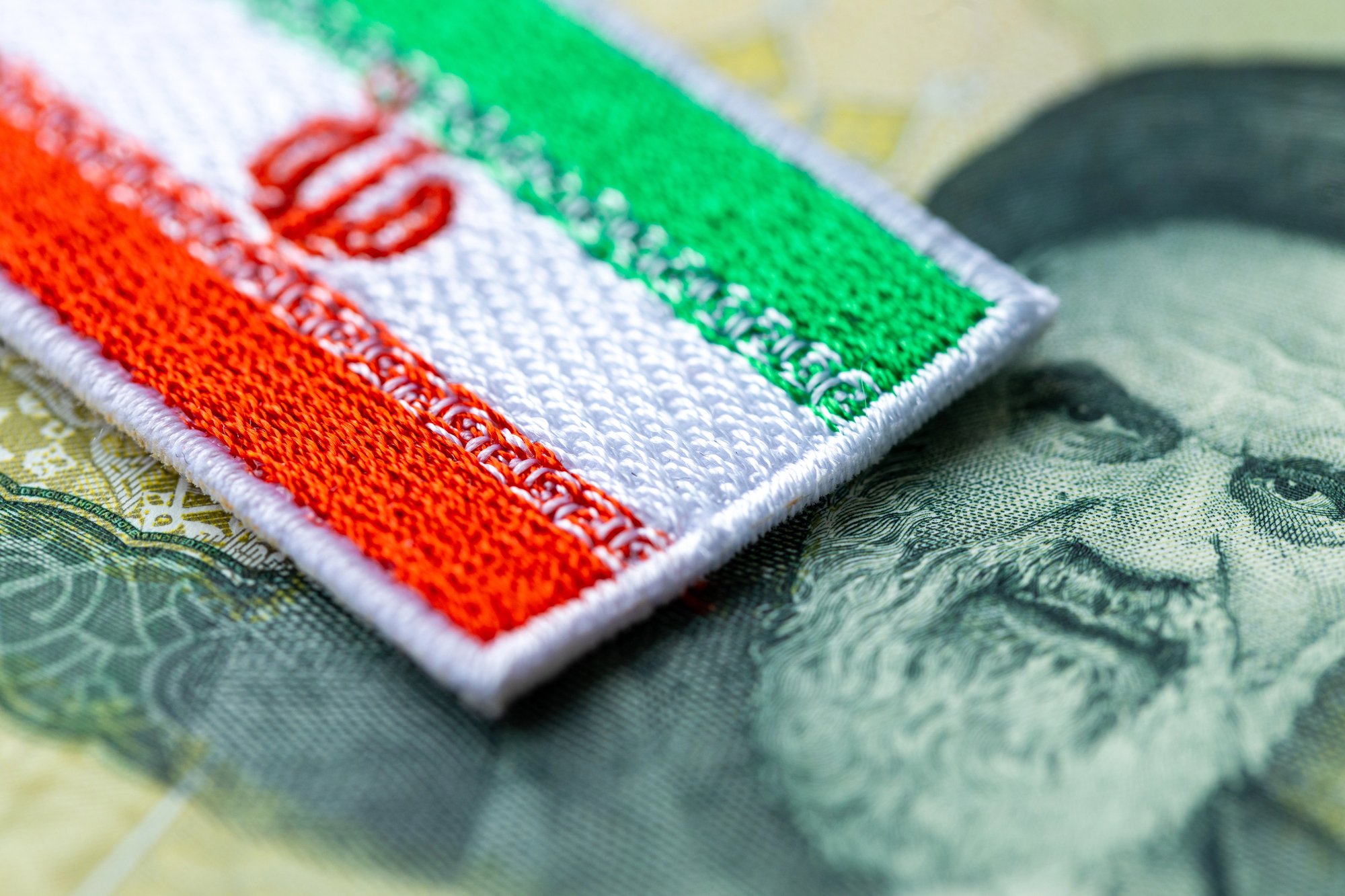
Iran (Islamic Republic of) remains one of the most populous and strategically significant countries in Asia. Located in Southern Asia and covering a vast 1,648,195 km², the country combines a large population base, relatively young age structure, and changing fertility patterns that are reshaping its demographic future. In 2024, Iran's population stands at 91,567,738, placing it among the larger nations not only in its subregion but globally as well.
What makes Iran especially interesting from a demographic perspective is the contrast between continued population growth and a below-replacement fertility rate. The country is still expanding at a rate of 1.05% annually, yet its total fertility rate (TFR) is just 1.695 children per woman. This means current growth is being sustained not by high fertility alone, but also by population momentum, improving survival, and positive net migration.
Iran's demographic profile also reveals notable gains in health and longevity. Life expectancy has climbed to 77.654 years, while infant mortality has fallen to 10.7 deaths per 1,000 live births. At the same time, a median age of 34.88 years suggests a country that is no longer extremely young, but not yet as old as many advanced economies.
This article explores Iran's current population overview, the drivers behind recent trends, the balance between births and deaths, age structure, migration, and what the future may hold if present patterns continue.
Iran (Islamic Republic of) (2024)
| Population | 91,567,738 |
| Growth Rate | 1.05% |
| Density | 55.8/km² |
| Fertility Rate (TFR) | 1.70 |
| Life Expectancy | 77.7 |
| Median Age | 34.9 |
| Birth Rate | 13.0‰ |
| Death Rate | 4.7‰ |
| Infant Mortality | 10.7‰ |
| Net Migration | 190,156 |
Population Size, Density, and Overall Momentum
With 91.57 million inhabitants in 2024, Iran has a population large enough to shape regional labor markets, urbanization, social policy, and economic demand. Given its land area of 1,648,195 km², this translates into an approximate population density of about 56 people per km². That density is moderate by Asian standards: Iran is far less crowded than countries such as India or Bangladesh, yet its population is large enough to create significant pressure on infrastructure, housing, water resources, and public services in major metropolitan areas.
The annual population growth rate is 1.0528692217054%, or roughly 1.05%. For a country of Iran's size, that pace is substantial. A growth rate around 1% means the population is still increasing meaningfully each year, adding hundreds of thousands of people annually. In practical terms, even moderate percentage growth can create a very large absolute increase when applied to a base of more than 91 million people.
Iran's continued expansion is significant because it comes at a time when many middle-income countries are entering slower-growth or even near-stagnant demographic phases. Iran has not yet reached that point. Its population still has momentum, partly because earlier generations were larger, and those cohorts are now in or near the prime childbearing and working ages.
This helps explain why a country can post a low fertility rate and still keep growing. Demography is not driven by a single indicator. Instead, the interaction between age structure, mortality, and migration can sustain expansion even when families are having fewer children than in the past.
Why momentum still matters
Population momentum occurs when a country has a relatively large share of people in reproductive ages, often due to higher fertility in previous decades. Even if today's women are having fewer children on average, the total number of births can remain fairly high because there are simply so many potential parents. Iran appears to be in exactly this kind of transition stage.
This means the country's growth is likely to continue in the near term, but the pace may gradually ease over time if low fertility persists. In other words, today's increase does not necessarily guarantee rapid expansion forever.
Births, Deaths, and the Shift to Lower Fertility
Iran's natural increase is still positive, meaning births continue to outnumber deaths by a comfortable margin. The crude birth rate (CBR) is 12.951 births per 1,000 population, while the crude death rate (CDR) is 4.672 deaths per 1,000 population. The difference between these two indicators suggests a natural increase of about 8.279 per 1,000 people.
That gap remains large enough to support population growth. However, the birth rate itself is not particularly high for a country at Iran's level of development and age structure. More striking is the TFR of 1.695, which is clearly below the replacement level of roughly 2.1 children per woman. Replacement fertility is the level at which a population would eventually stabilize in the absence of migration, assuming mortality remains low.
Iran's fertility decline is one of the most important long-term stories in its demographic evolution. A TFR below 2 indicates that each new generation, in the long run, would be smaller than the one before it unless offset by migration or demographic momentum. This has far-reaching implications for schools, labor supply, pension systems, and household structure.
What low fertility means for Iran
A TFR of 1.695 suggests that family size is now much smaller than in the country's high-growth past. This shift usually reflects a combination of factors such as:
- Urbanization and higher housing costs
- Later marriage and delayed childbearing
- More education, especially for women
- Changing aspirations regarding work, family, and consumption
- Greater access to health services and family planning
For policymakers, low fertility creates a complex balancing act. On one hand, smaller families can improve household investment per child and support women's economic participation. On the other, persistently low birth levels can eventually lead to population aging, slower labor-force growth, and increased dependency burdens.
Iran has not yet reached the extreme aging profile seen in some East Asian or European countries, but its fertility rate signals that such concerns are becoming increasingly relevant.
Deaths remain relatively low
The CDR of 4.672 is comparatively low and reflects both health improvements and a population that is not yet heavily skewed toward the oldest ages. In aging societies, death rates often rise simply because more people are elderly. Iran's current death rate suggests it is still in a demographic phase where mortality remains manageable, even as life expectancy improves.
Health, Life Expectancy, and Survival Gains
One of the strongest signs of demographic progress in Iran is its improving survival profile. Life expectancy at birth is 77.654 years, which is a solid outcome by regional standards. There is also a clear gender gap: 75.786 years for males and 79.628 years for females. This means women live, on average, about 3.84 years longer than men.
This female advantage is common around the world and often reflects a mix of biological, behavioral, and health-system factors. Men tend to face higher mortality risks from accidents, occupational exposure, certain diseases, and some lifestyle-related causes. For Iran, the gap is noticeable but not unusually large in international comparison.
Another important indicator is the infant mortality rate (IMR) of 10.7 deaths per 1,000 live births. This is far below the levels seen historically in developing populations and points to major gains in maternal and child health, vaccination, and access to medical care. Still, reducing infant mortality further remains a key public health goal, particularly where inequalities in access or regional service quality persist.
What these health indicators tell us
Taken together, Iran's life expectancy and infant mortality figures show a country that has made substantial progress in basic health outcomes. These improvements matter demographically because they alter the age structure over time:
- More children survive to adulthood
- More adults live into older age
- The population gradually shifts toward middle and older ages
- Healthcare systems must adapt from infectious disease control toward chronic disease management
As longevity rises, the policy focus naturally expands. It is no longer only about reducing early death; it is also about ensuring healthy aging, long-term care, and sustainable financing for retirement and medical systems.
Age Structure, Migration, and the Road Ahead
Iran's median age is 34.878291202086 years, or about 34.88 years. This places the country in an intermediate demographic position: older than very youthful, high-fertility populations, but younger than many advanced economies where median ages often exceed 40 or even 45.
A median age in the mid-30s can be demographically advantageous. It usually means a large working-age population capable of driving production, consumption, and tax revenue. If matched with strong job creation, education, and economic opportunity, this age profile can support a demographic dividend. But if employment growth is too weak, a large working-age population may instead face underemployment, outward pressure, or social frustration.
Positive net migration adds to growth
Iran records net migration of 190,156, meaning more people are entering or remaining in the country than leaving it, on balance. In demographic terms, this is a meaningful contribution to overall growth. While migration is often a smaller component than births and deaths in large countries, a positive net figure of this size can still influence labor markets, urban settlement patterns, and age composition.
Migrants are often concentrated in younger adult ages, which can help sustain the workforce and, indirectly, support birth numbers. If positive migration continues while fertility remains below replacement, it could soften some of the long-term slowdown that would otherwise emerge from low fertility alone.
That said, migration trends can change quickly depending on geopolitics, economic performance, labor demand, and regional security conditions. For that reason, migration should be seen as an important but somewhat less predictable component of demographic change.
Comparing current growth with future risks
Iran's current demographic picture contains both strengths and warning signs:
- Strengths: a large population, relatively moderate median age, improving longevity, low death rate, and positive migration
- Risks: below-replacement fertility, eventual aging, slower long-term labor-force growth, and rising pressure on healthcare and pensions
If fertility remains around 1.695 over the long run, Iran's population growth will almost certainly slow. The country may still continue growing for some time due to momentum, but projections would likely show a gradual deceleration and eventual stabilization, followed perhaps by decline later in the century if no offsetting changes occur.
This is the central demographic paradox of contemporary Iran: it is still growing, yet the seeds of future aging are already visible in today's low fertility rate.
Policy questions that will shape the future
Iran's next demographic chapter will depend on how successfully it responds to several key issues:
- Can fertility recover modestly? Even a small increase could change long-term projections.
- Can the economy absorb working-age adults? Employment is crucial to converting demographic size into prosperity.
- Can health systems prepare for aging? Longer life spans require more chronic care and elder support.
- Will migration remain positive? Migration may help cushion slower natural increase.
- Can regional inequalities be reduced? Balanced development affects both health and family decisions.
These questions matter because population change is slow but powerful. Once fertility remains low for many years, age structure shifts become difficult to reverse quickly.
Iran in Regional and Global Context
In broader perspective, Iran represents a demographic middle case between youthful developing countries and aging industrial societies. Its 91.6 million people give it major demographic weight in Southern Asia, while its life expectancy of 77.654 years reflects meaningful progress in human development. At the same time, its TFR of 1.695 places it firmly among countries where family size has dropped below replacement level.
This combination is increasingly common across parts of Asia: populations are still large, mortality is low, and societies are transitioning into maturity before they have fully adjusted economically and institutionally to aging. For Iran, the demographic challenge is therefore not one of explosive fertility, but of managing transition wisely.
Compared with countries that are already very old, Iran still has time. Its median age of 34.88 is not yet a sign of demographic exhaustion. But compared with younger, higher-fertility populations, the country's path is clearly moving toward slower growth and older age structures.
That makes this a critical period. The decisions made now in employment, health, housing, family policy, and migration governance will influence whether Iran experiences a smooth demographic transition or encounters sharper social and economic strains later on.
Conclusion
Iran's demographic outlook in 2024 is defined by scale, transition, and contradiction. The country has a population of 91,567,738, growing at 1.05% per year across a territory of 1,648,195 km². Births still exceed deaths by a clear margin, with a CBR of 12.951 and a CDR of 4.672, while net migration of 190,156 adds further momentum.
At the same time, Iran's TFR of 1.695 signals a deeper shift. Family size has fallen below replacement level, pointing to slower future growth and eventual aging if current patterns hold. Health conditions are comparatively strong, with life expectancy at 77.654 years and infant mortality at 10.7, while a median age of 34.88 shows a society in demographic mid-transition.
In simple terms, Iran is still a growing country, but not in the old way. Its future will be shaped less by high fertility and more by the balance between population momentum, migration, longevity, and policy choices. That is what makes Iran one of the most fascinating demographic stories in Asia today: a nation still expanding, yet already preparing for a more mature and aging tomorrow.


Comments (0)
Leave a Comment
No comments yet. Be the first to comment!