
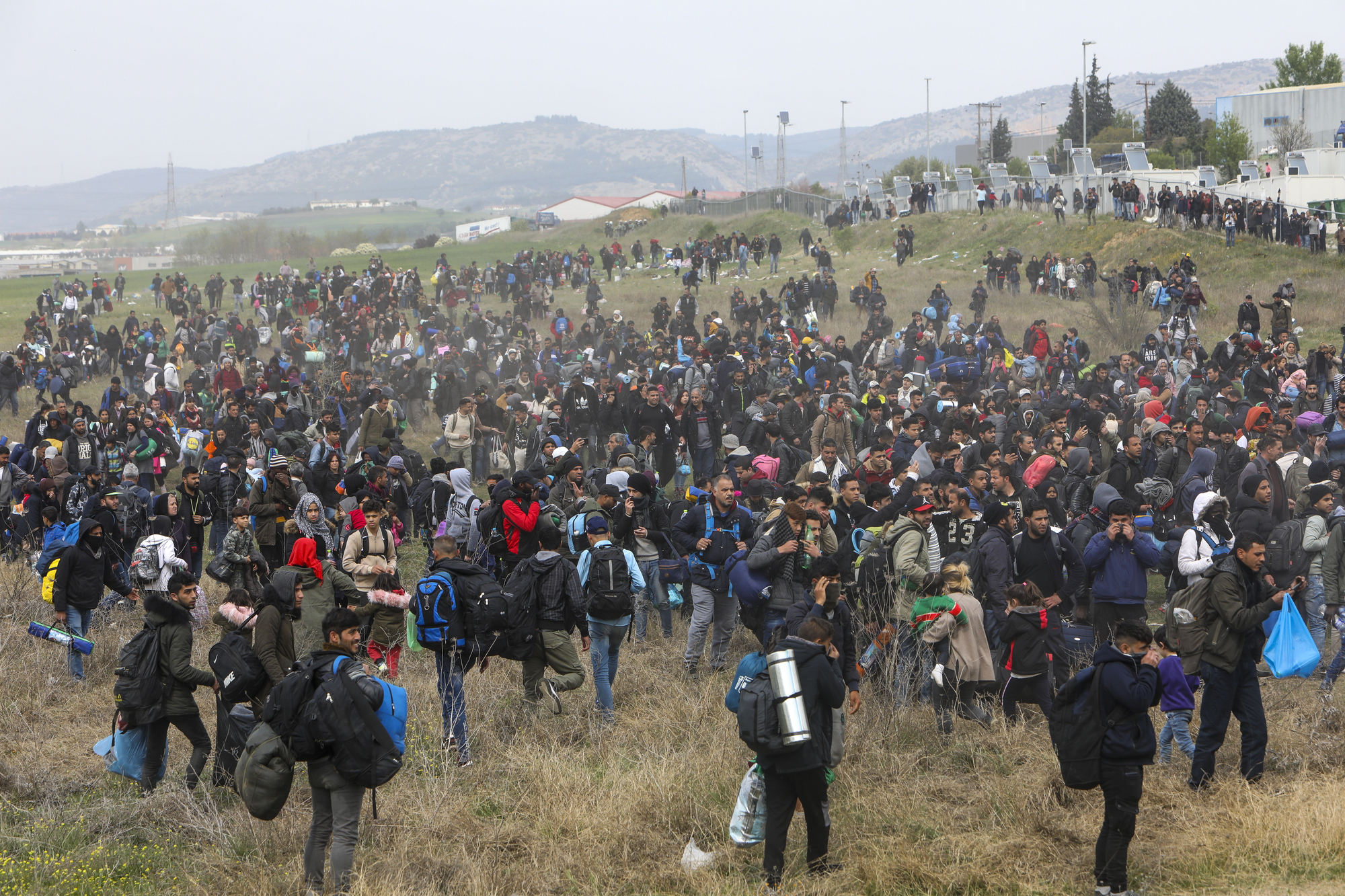
Migration is one of the most powerful forces shaping the modern world. It influences population growth, labor markets, urban development, public services, politics, and family life across continents. In 2024, the world population stands at 8,118,063,503, growing at an average rate of 1.1% per year. At the same time, the world’s average total fertility rate (TFR) is 2.38, average life expectancy is 73.6 years, and the global median age is 33.7. These headline figures matter because migration does not happen in isolation: it is tightly connected to demographic pressure, aging, economic opportunity, and uneven development.
Some countries are expanding rapidly because of youthful populations and natural increase, while others are aging and need workers. Some regions face climate stress, conflict, or political instability, pushing people to leave. Others attract migrants because they offer safety, jobs, education, and higher living standards. As a result, global migration patterns are becoming more complex, more visible, and more politically significant.
This article explains the main migration patterns in the world today, the reasons behind them, and what they mean for the future. It also places migration in a broader demographic context, using key global indicators to show why mobility is likely to remain central to population change in the decades ahead.
Migration in a World of 8.1 Billion People
With more than 8.1 billion people alive in 2024, even a small share of the population moving across borders or within countries translates into very large numbers. Migration can be divided into two broad forms: international migration, when people cross national borders, and internal migration, when they move within their own country. Both are important, but international migration tends to receive more political attention.
Global migration patterns are shaped by unequal demographic structures. A world median age of 33.7 suggests a planet that is neither uniformly young nor uniformly old. Instead, it contains a mix of youthful societies with fast labor-force growth and older societies where births are low and workforces are stagnating or shrinking. The global TFR of 2.38 is above replacement level at the world scale, but many countries are already far below replacement, while others remain much higher. This imbalance creates strong incentives for migration.
The demographic logic behind migration
Migration often reflects differences between countries in:
- Population growth: At a global average of 1.1%, the world is still growing, but not all regions grow at the same pace.
- Age structure: Younger populations tend to generate more potential migrants, especially among working-age adults.
- Fertility: A global average TFR of 2.38 masks wide regional gaps between high-fertility and low-fertility countries.
- Longevity: Average life expectancy of 73.6 years means populations are living longer, which can intensify aging in destination countries.
In practical terms, migration often connects places with a surplus of young workers to places with labor shortages. It can also connect fragile regions to safer ones, poorer regions to richer ones, and rural areas to expanding cities.
Not all migration follows the same path
There is no single global migration story. Some of the most important movements include:
- South-to-North migration, driven by income and employment gaps.
- South-to-South migration, often underestimated, including movement between neighboring developing countries.
- North-to-North migration, linked to skilled labor, education, and business mobility.
- Rural-to-urban migration, which remains one of the largest migration flows in the world.
- Forced displacement, caused by war, persecution, and environmental shocks.
These overlapping patterns show that migration is not only about crossing oceans to reach wealthy countries. Much of it happens over short distances, between neighboring states, or inside national borders.
Economic Opportunity: The Strongest Pull Factor
The search for better jobs and higher wages remains the single most important cause of migration worldwide. Economic migration is especially strong where demographic and labor-market conditions diverge sharply. In younger countries, large cohorts of new workers may struggle to find stable employment. In aging countries, employers may face shortages in health care, construction, agriculture, logistics, domestic work, and technology.
The demographic data help explain why this mismatch matters. A world population of 8,118,063,503 with average annual growth of 1.1% means millions of people are added each year. In regions where education systems and labor markets cannot absorb them, migration becomes a household strategy for survival and advancement. Remittances sent home by migrants then become a major source of income for families and communities.
Why workers move
Economic migration is usually shaped by a combination of push and pull factors:
- Low wages or unemployment in origin countries
- Demand for labor in destination countries
- Higher returns to education abroad
- Established migrant networks that reduce the risk of moving
- Currency differences that make earnings abroad more valuable at home
In aging societies, migration increasingly supports population stability. With global life expectancy averaging 73.6 years, many countries are seeing larger older populations and slower natural increase. Where fertility is below replacement for long periods, migration can slow labor-force decline and help sustain tax bases and public services.
Skilled and low-skilled migration are both rising
Global migration includes both highly educated professionals and workers in lower-paid sectors. Doctors, nurses, engineers, researchers, and students move through formal recruitment channels. At the same time, farms, hotels, homes, warehouses, and care systems rely heavily on migrants doing physically demanding and essential work.
This creates both benefits and tensions. Destination countries gain labor and human capital, but origin countries may lose trained workers. This is especially controversial in health care, where poorer countries can face shortages if nurses and physicians emigrate in large numbers.
Conflict, Instability, and Forced Migration
Not all migration is voluntary. One of the most tragic migration patterns is forced displacement, when people flee war, persecution, insecurity, or state collapse. In such cases, migration is less a matter of opportunity than of survival.
Forced migration can happen suddenly, with large numbers leaving in a short period, or gradually, as violence and insecurity make normal life impossible. Neighboring countries usually receive the first and largest waves of displaced people, which means the burden often falls on states that are not especially wealthy themselves.
The main drivers of forced movement
- Armed conflict and civil war
- Political persecution and repression
- Ethnic or religious violence
- Collapse of basic services such as health care, policing, and food systems
- Chronic insecurity from militias, gangs, or fragile governance
Unlike many economic migrants, displaced people often leave with little planning, few possessions, and uncertain legal status. Their destinations are shaped less by labor demand and more by proximity, border access, asylum rules, and humanitarian assistance.
Demographic effects on origin and destination countries
Forced migration has major population consequences. Origin countries can lose young adults, skilled workers, and entire families, damaging future recovery. Destination areas may experience sudden pressure on housing, schools, health systems, and infrastructure. Yet they may also gain labor, entrepreneurship, and long-term demographic renewal if integration succeeds.
These movements are occurring in a world where the average median age is 33.7, meaning many migrants are younger than host populations in older regions. That age difference can become economically significant over time, particularly where host countries face shrinking working-age populations.
Climate, Environment, and the Geography of Risk
Climate and environmental pressures are becoming more important in migration decisions. Although environmental change is rarely the sole reason people move, it increasingly acts as a multiplier of existing vulnerability. Drought, flooding, coastal erosion, heat stress, crop failure, and water scarcity can reduce livelihoods and make certain areas harder to inhabit.
In a world of 8.1 billion people, environmental shocks affect more communities than ever simply because more people live in exposed regions, especially in coastal zones, drylands, and fast-growing cities. Population growth of 1.1% annually means that settlement often expands into higher-risk areas, increasing future displacement risk.
How climate influences migration
Climate-related migration can take several forms:
- Temporary displacement after storms, floods, or wildfires
- Seasonal migration as agricultural conditions worsen
- Permanent relocation from highly vulnerable coastal or drought-prone areas
- Urban migration when rural livelihoods become less viable
Environmental migration is difficult to measure because it often overlaps with poverty, state weakness, and labor migration. A farmer may move because rainfall changed, because crop income collapsed, or because a city offers more opportunity. In reality, all three may be true at once.
Why climate migration will likely grow
Future pressure is likely to increase because of demographic momentum. Even though the global TFR is down to 2.38, the population is still growing and living longer, with life expectancy at 73.6. More people surviving to older ages is a sign of human progress, but it also means greater demand for secure housing, food systems, water, and resilient infrastructure. When environmental systems are strained, migration becomes one adaptation strategy.
Low-income populations are usually the most exposed, but not always the most mobile. In fact, the poorest households may become trapped populations, lacking the resources to move even when conditions deteriorate. This is why climate migration is not just an environmental issue; it is also a development and inequality issue.
Aging, Fertility Decline, and the Future of Global Migration
One of the most important long-term drivers of migration is the growing contrast between older, low-fertility societies and younger, faster-growing ones. The world’s average TFR of 2.38 is still above replacement, but many economically advanced countries are well below that level. Over time, low fertility contributes to population aging, slower natural increase, and in some cases population decline.
At the same time, younger populations in parts of Africa, Asia, and other regions are entering working age in large numbers. This does not automatically produce migration, but it creates the conditions under which migration can rise, especially if job creation falls behind labor-force growth.
Why destination countries may rely more on migrants
Countries with aging populations often need migrants for both economic and demographic reasons:
- To fill labor shortages in key sectors
- To support pension and tax systems
- To stabilize school enrollments and local communities
- To offset natural decrease where deaths exceed births
This does not mean migration can fully solve aging. No realistic migration flow can permanently reverse very low fertility on its own. But migration can slow demographic decline, support workforce renewal, and buy time for policy adjustment.
Future trends to watch
Several migration trends are likely to define the next decades:
- More competition for workers among aging countries
- Continued urban concentration in major destination cities
- More mixed migration flows, combining labor, family, study, and protection motives
- Stronger links between climate stress and mobility
- Growing political debate over borders, integration, and citizenship
The world median age of 33.7 will not stay static. As populations age further in many regions, migration may become even more central to economic planning. At the same time, governments will face pressure to manage integration more effectively, reduce irregular migration, and cooperate across borders.
Conclusion
Migration is not a side story in global demography; it is one of its defining processes. In 2024, the world has 8,118,063,503 people, an average TFR of 2.38, average life expectancy of 73.6, average growth of 1.1%, and a median age of 33.7. These figures reveal a world that is still growing, but unevenly; still young in some places, but rapidly aging in others; increasingly mobile, but under very different kinds of pressure.
The main causes of migration are clear: economic opportunity, conflict and insecurity, environmental stress, and demographic imbalance. Yet the way these causes interact is what truly matters. A person may move because jobs are scarce, because drought hurt farming, because violence spread, or because family members already migrated. Migration is usually multi-causal, shaped by both personal decisions and structural realities.
Looking ahead, migration will remain essential to understanding how populations change. It can support economies, relieve labor shortages, and improve household incomes. It can also create policy challenges around housing, services, social cohesion, and legal status. The most successful responses will recognize that migration is neither a temporary anomaly nor a problem with a single solution. It is a normal and enduring feature of a deeply unequal, interconnected, and demographically diverse world.
For policymakers and the public alike, the key challenge is not whether migration will continue. It will. The real question is how societies choose to manage it: through crisis and reaction, or through planning, evidence, and long-term cooperation.



Comments (0)
Leave a Comment
No comments yet. Be the first to comment!