
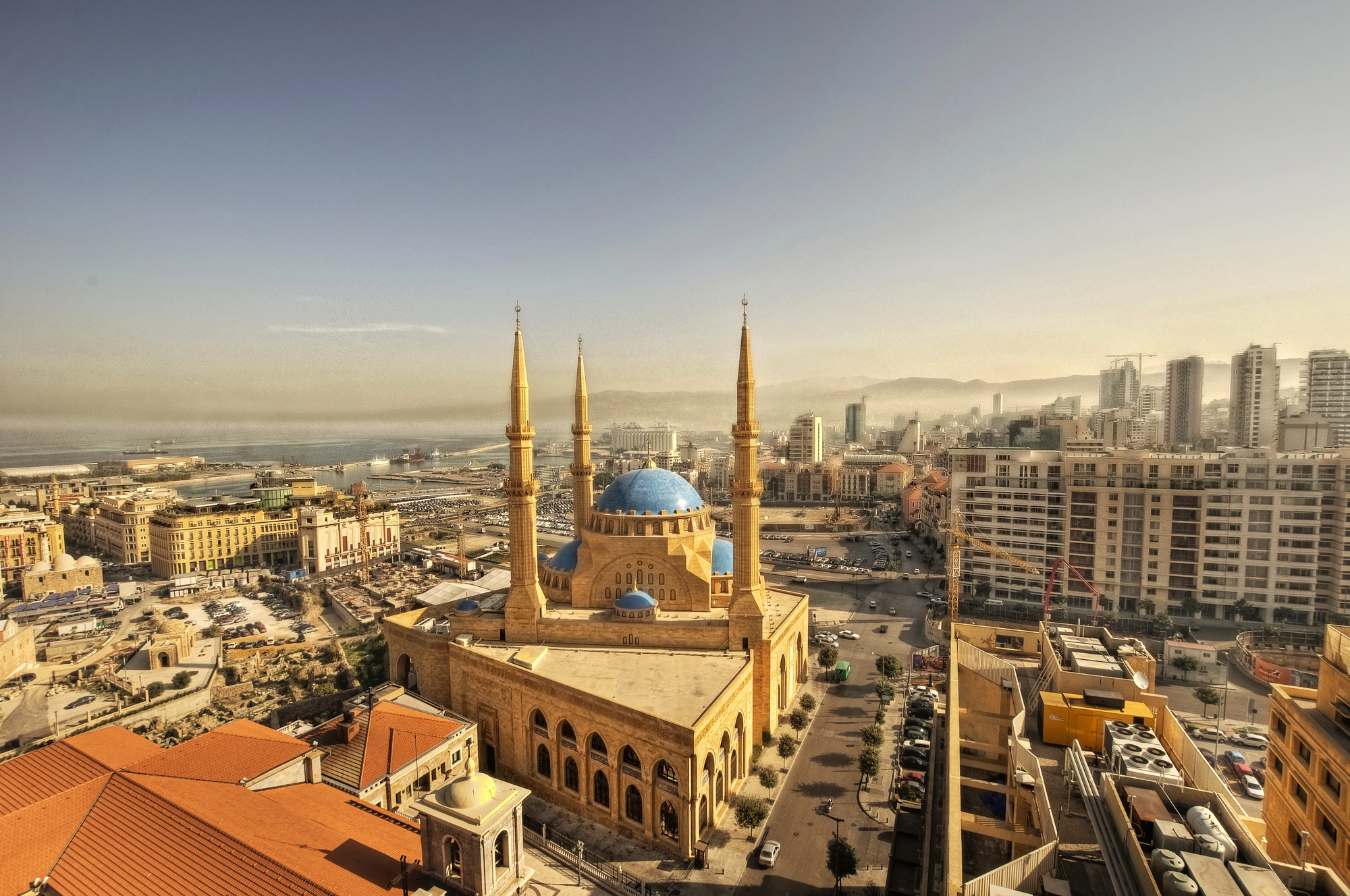
Lebanon is one of the most closely watched countries in Western Asia from a demographic perspective. Despite its small land area of just 10,452 km², it has a relatively large population of 5,805,962 people in 2024. That gives the country a high population density and places significant pressure on housing, services, infrastructure, and the labor market. At the same time, Lebanon's population story is not only about size. It is also about age structure, migration, fertility, and the balance between births and deaths.
In 2024, Lebanon's annual population growth rate stands at 0.56%. This indicates continued growth, but at a modest pace. The country combines a total fertility rate (TFR) of 2.239 children per woman with a crude birth rate (CBR) of 16.144 births per 1,000 people and a crude death rate (CDR) of 5.962 deaths per 1,000 people. These figures suggest that natural increase remains positive. However, net migration is negative at -17,267, showing that more people are leaving the country than entering it on a long-term basis.
Lebanon also shows strong social development indicators in some areas. Life expectancy at birth is 77.817 years, including 75.744 years for males and 79.734 years for females. The median age is 33.7 years, pointing to a population that is neither especially young nor especially old by regional standards. Meanwhile, the infant mortality rate is 16 per 1,000 live births, a figure that highlights progress in health outcomes compared with many developing countries, while also showing room for improvement.
This article explores Lebanon's population overview and recent demographic trends, explains what the key indicators mean, and considers what the country's demographic future may look like if current patterns continue.
Lebanon (2024)
| Population | 5,805,962 |
| Growth Rate | 0.56% |
| Density | 564.4/km² |
| Fertility Rate (TFR) | 2.24 |
| Life Expectancy | 77.8 |
| Median Age | 33.7 |
| Birth Rate | 16.1‰ |
| Death Rate | 6.0‰ |
| Infant Mortality | 16.0‰ |
| Net Migration | -17,267 |
Population Size, Density, and Overall Growth
With 5.81 million residents in 2024 and a territory of only 10,452 km², Lebanon is a densely populated country. A simple population-to-area calculation suggests a density of roughly 555 people per km². This is very high by global standards and reflects the concentration of people in a narrow coastal and mountain corridor, where major cities and economic activity are located.
Population density matters because it shapes everyday life. In Lebanon, high density can intensify demand for:
- Housing, especially in urban and peri-urban areas
- Water and electricity networks
- Schools and hospitals
- Transport infrastructure
- Jobs and economic opportunities
Although Lebanon's population is still growing, the pace is not rapid. The growth rate of 0.5608% indicates a relatively slow increase. In practical terms, this means the population is expanding, but not explosively. This kind of growth is often associated with countries that are moving through the later stages of demographic transition: birth rates are no longer very high, death rates are low, and migration can strongly influence the final outcome.
That is exactly what we see in Lebanon. The country is not driven by high fertility alone, nor by extremely low mortality alone. Instead, it is shaped by a combination of moderate fertility, relatively long life expectancy, and significant out-migration.
How Natural Increase Supports Growth
A useful way to understand Lebanon's population growth is to compare births and deaths. The country records a crude birth rate of 16.144 and a crude death rate of 5.962 per 1,000 population. The difference between these two values implies a natural increase of about 10.182 per 1,000 people. In simple terms, there are still considerably more births than deaths each year.
This natural increase is the main reason Lebanon's total population continues to rise. Without it, the negative migration balance would likely pull overall population growth much lower, or even into decline.
Why Growth Feels Different from the Numbers
Even when official population growth remains positive, public perception may be more pessimistic. In Lebanon's case, economic strain, emigration, and uneven development can make demographic change feel unstable. Families may see younger adults leaving, while cities may still experience crowding. This is one reason demographic statistics need context: population can grow overall while many communities experience local losses or age shifts.
Births, Fertility, and the Reproductive Profile of Lebanon
Lebanon's total fertility rate of 2.239 is one of the most revealing indicators in the dataset. A TFR around 2.1 is often considered close to replacement level in low-mortality populations. Lebanon's figure is therefore only slightly above replacement, suggesting that families are having enough children to sustain long-term population size under stable conditions, but not at a very high level.
This places Lebanon in an interesting demographic position. It is no longer a country of high fertility in the traditional sense, yet it has not moved far below replacement as seen in some aging societies. Instead, it sits in a middle zone where family size remains moderate.
What the Birth Rate Tells Us
The crude birth rate of 16.144 births per 1,000 population is consistent with moderate fertility. This is not a very low birth rate, but it is also not the kind of high fertility pattern associated with extremely youthful populations. It suggests that Lebanon still adds a meaningful number of children each year, supporting school-age populations and future labor supply.
Several factors typically influence fertility at this level, including:
- Urbanization and the cost of housing
- Women's education and labor-force participation
- Access to healthcare and family planning
- Economic uncertainty and delayed marriage
- Cultural preferences regarding family size
In Lebanon, these pressures often pull in different directions. Social and cultural norms may support family formation, but economic constraints can discourage larger families. The result is a fertility level that remains viable but restrained.
Implications for Schools and the Future Workforce
Because fertility is moderate rather than sharply low, Lebanon is not yet facing the kind of severe birth collapse seen in some countries. This means there should still be a sizable younger population entering schools and eventually the labor market. However, if economic hardship continues and migration removes many young adults, the long-term effect could still be a thinner domestic workforce than headline population numbers suggest.
That is one of the key population challenges for Lebanon: the issue may not be too few births alone, but whether the country can retain and support the people it raises.
Age Structure, Longevity, and Health Conditions
Lebanon's median age of 33.699 years places it in a relatively balanced demographic category. It is older than very youthful developing populations, but younger than many advanced aging societies in Europe or East Asia. This suggests a population with a substantial working-age core, alongside meaningful child and older-age groups.
Such an age structure can be advantageous. Countries with a median age in the low-to-mid 30s often enjoy a potentially favorable balance between dependents and workers, provided the economy can generate enough opportunities. In other words, Lebanon's age structure could be a strength if matched with employment growth, stable institutions, and public services.
Life Expectancy Shows Relative Strength
At 77.817 years, life expectancy in Lebanon is comparatively high for the broader region. The gender gap is also notable: males are expected to live 75.744 years, while females reach 79.734 years. This female advantage of nearly 4 years follows a common global pattern, where women tend to outlive men due to a mix of biological, behavioral, and social factors.
Higher life expectancy usually reflects gains in:
- Maternal and child health
- Vaccination and infectious disease control
- Nutrition and sanitation
- Access to medical treatment
- Reduced mortality at younger ages
For Lebanon, these life expectancy levels point to important health achievements, even if service quality and access may vary across regions and social groups.
Infant Mortality and Health Risks
The infant mortality rate of 16 per 1,000 live births is a critical indicator because it captures the health environment experienced by mothers and newborns. Lebanon's figure is far below the very high infant mortality rates seen in the poorest countries, but it remains above the levels typical in the world's most advanced healthcare systems.
This means Lebanon occupies a middle position: the country has made substantial progress, yet there is still room to reduce preventable infant deaths through stronger prenatal care, neonatal services, nutrition support, and broader public-health stability.
Is Lebanon Aging?
Lebanon is gradually aging, but not dramatically. A median age of 33.7 and life expectancy near 78 together indicate that aging is underway, though it is not yet the dominant demographic story. The more immediate concern may be the interaction between modest fertility and outward migration. If many young adults leave, the population can age faster than fertility data alone would imply.
Migration, Economic Pressure, and Demographic Uncertainty
One of the most important figures in Lebanon's demographic profile is its net migration of -17,267. This negative number means that, overall, more people are leaving the country than settling in it. In demographic terms, that acts as a drag on population growth. In social and economic terms, it can be even more significant.
Migration often does not affect all age groups equally. People most likely to emigrate are frequently young adults, skilled workers, students, and families seeking better opportunities. When this happens, the impact goes beyond headcount. It can alter the labor force, reduce the number of future births, and shift the age structure.
Why Migration Matters So Much
In a country with moderate fertility and decent life expectancy, migration can become the deciding factor in long-term demographic change. Lebanon's negative migration balance means that natural increase is partly offset by departures. If out-migration deepens, population growth could slow substantially in the years ahead.
The consequences of continued emigration may include:
- Brain drain from the education and health sectors
- Lower labor-force growth in key productive ages
- Delayed family formation among those who leave or plan to leave
- Regional imbalances between urban centers and smaller communities
- Greater dependency pressure if the working-age share weakens over time
Population Pressure in a Small Territory
It may seem contradictory that Lebanon can experience emigration and still feel densely populated. But both can be true at the same time. The country's small area and concentration of settlement mean local crowding can remain intense even when net migration is negative. Population distribution is therefore just as important as total population size.
Urban concentration, especially around major economic corridors, can keep demand high for land and services. Meanwhile, peripheral areas may face stagnation or local population loss. This uneven demographic geography is a common challenge in smaller countries.
What the Future Could Look Like
Looking ahead, Lebanon's demographic future will likely depend on three main forces: fertility, migration, and health outcomes. Current figures suggest that the country is not on the brink of demographic collapse, but neither is it in a phase of strong expansion. Instead, it appears to be heading toward slow growth with rising sensitivity to migration patterns.
Short-Term Outlook
In the short term, Lebanon's population is likely to continue increasing modestly because births still outnumber deaths by a clear margin. A birth rate of 16.144 compared with a death rate of 5.962 provides a healthy natural increase. This should continue to support some overall growth unless migration losses expand significantly.
Medium-Term Risks and Opportunities
Over the medium term, however, the balance becomes more delicate. If the TFR remains around 2.239, Lebanon will maintain a broadly sustainable reproductive base. But if economic pressures push fertility lower while emigration remains negative, the country's age structure may begin to tilt older more quickly.
On the positive side, a median age of 33.7 means Lebanon still has time to benefit from its working-age population. If policy and economic conditions improve, the country could convert this demographic profile into stronger productivity and social resilience.
Comparison with Older, Slower-Growing Countries
Compared with countries that have very low fertility and much older populations, Lebanon still looks relatively demographically dynamic. It has a younger age profile, a higher fertility rate, and population growth that remains positive. Yet compared with more youthful societies in parts of Africa or South Asia, Lebanon is clearly further along in demographic transition. That makes it a classic middle-case country: no longer young in the old sense, but not yet old in the modern demographic sense.
This middle position offers both flexibility and uncertainty. The country can still shape its future, but it must manage migration losses and maintain health and social services if it wants to avoid a slower, more difficult demographic path.
Conclusion
Lebanon's population in 2024 stands at 5,805,962, living within a compact area of 10,452 km². The result is a highly dense population with continuing, but modest, annual growth of 0.56%. The demographic foundation remains positive: a TFR of 2.239, a birth rate of 16.144, and a death rate of 5.962 mean natural increase is still strong enough to sustain growth.
At the same time, Lebanon's demographic profile is shaped by complexity. Life expectancy of 77.817 years and a median age of 33.7 point to a population that is relatively healthy and mature, but not yet heavily aged. The infant mortality rate of 16 shows meaningful health progress, though further improvement remains possible. Most importantly, net migration of -17,267 reveals a persistent outward flow that may become increasingly important in determining the country's future.
In short, Lebanon is a country where demographic momentum still exists, but where the real story lies in the tension between natural population growth and economic-driven emigration. If it can retain more of its young adults and maintain health gains, Lebanon could continue to grow steadily while preserving a balanced age structure. If not, slower growth and faster aging may gradually emerge. Either way, the numbers show a population at an important turning point.



Comments (0)
Leave a Comment
No comments yet. Be the first to comment!